KWM Karl Weisshaar Ing. GmbH is a roughly 500-employee sheet metal specialist based in Mosbach, Germany, running through more than 5,500 tons of steel, stainless steel, and aluminum a year. Their customer base spans rail vehicle manufacturing, printing press production, automotive, food processing, medical technology, and cleanroom applications, industries with very different tolerance and finish requirements sharing the same shop floor. KWM's service range covers engineering, cutting, welding, assembly, and logistics.
The application
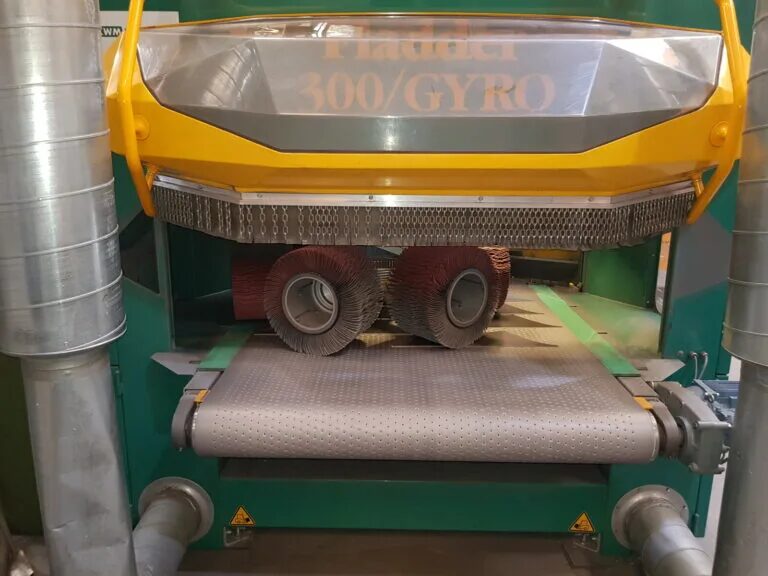
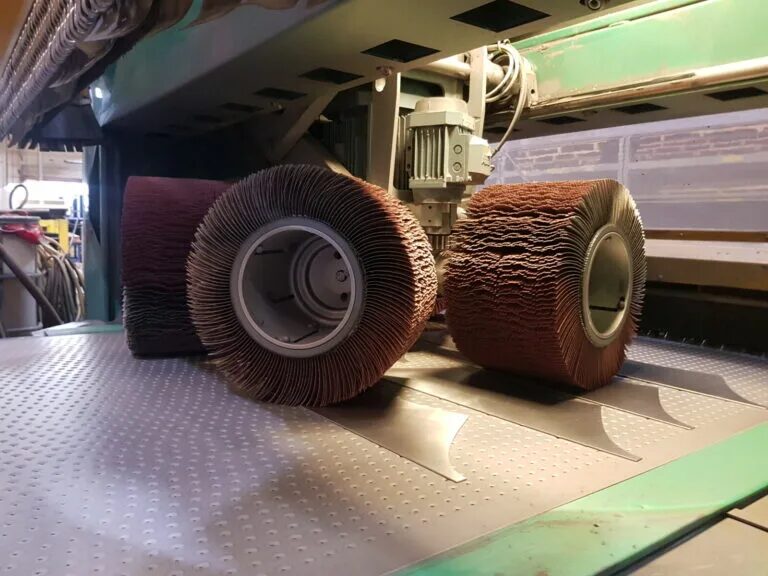
KWM runs a FLADDER GYRO/300 automated deburring machine with six grinding spindles working in opposing pairs with an oscillating motion, built to handle high part volume without a manual deburring bottleneck. The issue was not the machine itself but how many passes it took to get there: parts needed four full passes through the FLADDER to reach adequate edge rounding, which is a lot of machine time to spend on a single processing step at KWM's volume.
What changed
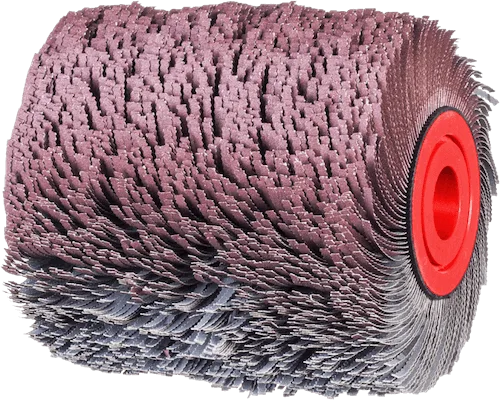
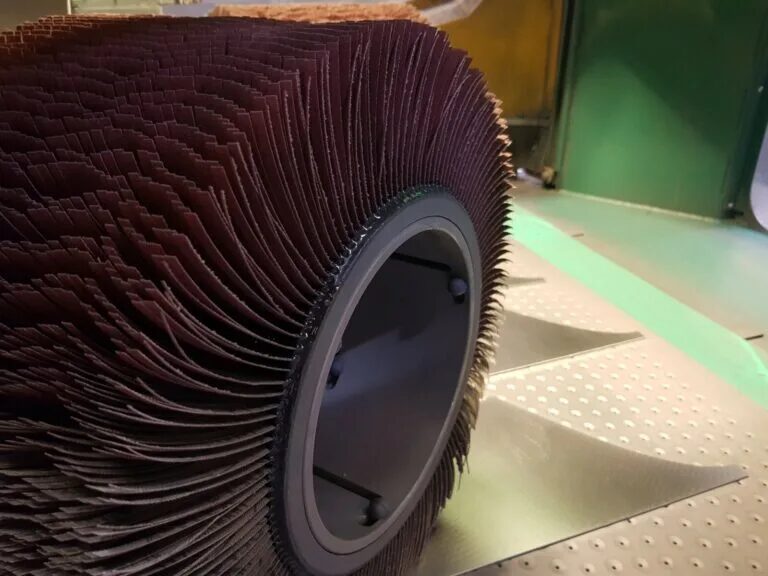
KWM switched to Boeck deburring rollers sized at roughly 15.75 in. diameter by 9.84 in. width with a 7.87 in. bore, and cut the process from four passes down to two. Jürgen Braun, the shop's grinding and deburring supervisor, says the change delivered a 50 percent reduction in processing time while also improving edge rounding quality, not a straight tradeoff of speed for finish.
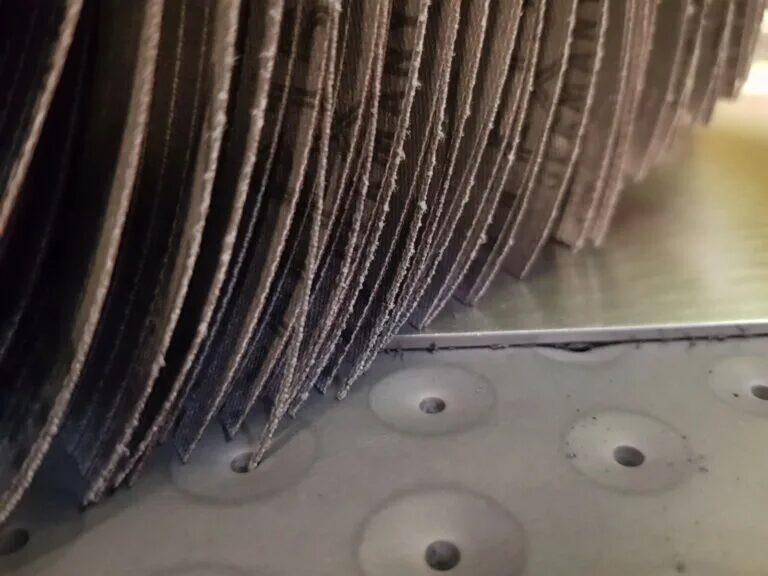
Part of that comes down to how the rollers are built: laser-cut abrasive lamellae arranged in the grinding direction, a dense abrasive fabric, and a one-piece construction rather than a segmented wheel, all aimed at holding balance and material removal rate steady through a longer service life. The rollers are also lighter than their grinding fabric density would suggest, which cuts down on bearing load in the machine over time.
Why it matters for a shop like KWM's
Halving the pass count on a deburring step matters a lot more on a line running 5,500-plus tons a year than it would on a low-volume job shop, every pass eliminated is machine time freed up across a huge part count. And because KWM serves industries like rail, medical, and food processing that do not have much room for inconsistent edge quality, getting there without sacrificing the edge round was the part that actually made the change worth making, not just the time saved on paper.
Running a Fladder line? Our Deburring Wheel is configurable for Fladder at 150mm, 300mm, 350mm, and 400mm, the 400mm size matching the roller diameter described here.
Source: Boeck GmbH.