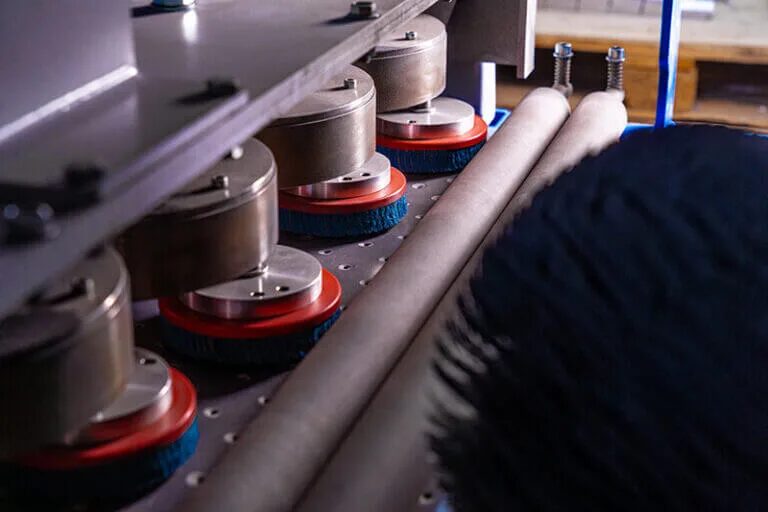
A part coming off a laser, plasma, or oxy-fuel cutting table is not ready for the next step yet. It still has slag or dross clinging to the underside, sharp burrs along the cut edge, and in the case of plasma and oxy-fuel especially, a layer of heat-affected oxide scale on the surface. None of that is optional to deal with if the part is getting welded, coated, or assembled. Here is the general workflow shops follow to get from a fresh cut to a ready edge.
1. Slag and scale removal
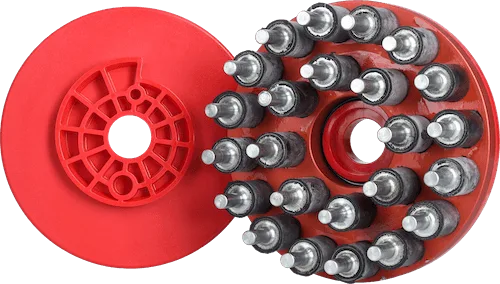
This is the first stop after cutting. Plasma and oxy-fuel cutting in particular leave slag or dross adhered to the bottom edge of the part, and it needs to come off before anything else happens to the part. A deslagging brush handles this stage, running along the cut edge to knock loose the slag without gouging the base metal.
2. Deburring and edge rounding
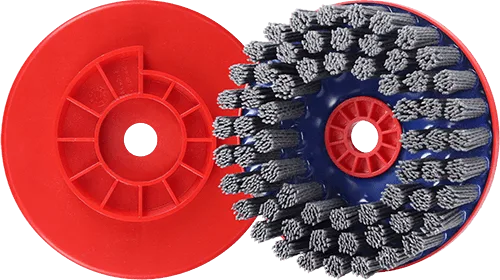
Once the slag is gone, the cut edge itself is still sharp, and often has a thin burr left over from the cutting process. Deburring knocks that burr down and rounds the edge to a safe, consistent profile, which matters both for handling safety and for how well a coating or weld will hold along that edge later. This stage covers the widest range of tooling, brushes, wheels, discs, and belts, since the right choice depends heavily on the part geometry and whether you are working by hand or on an automated line.
3. Oxide removal
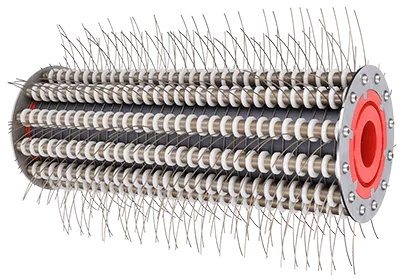
Plasma and oxy-fuel cutting generate heat that leaves a thin oxide layer along the cut edge, sometimes visible as discoloration. If the part is getting painted, powder-coated, or welded, that oxide layer needs to come off first, since it can interfere with adhesion. Oxide wheels and brushes are built specifically for this, working the cut edge without removing excess base material.
4. Finish grinding
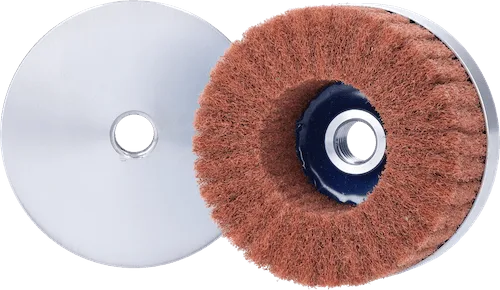
The last stage is about surface appearance and final tolerance, not just edge safety. Finish grinding with non-woven discs, belts, or polishing tools smooths out any remaining scratch pattern and brings the part to its final surface finish, whether that is a uniform brushed look or prep for a mirror polish.
Not every part needs all four stages
A structural steel part getting welded into a frame might only need slag removal and a basic deburr. A decorative stainless panel might skip straight from cutting to finish grinding if the cut edge is already clean. The workflow above is the full sequence, but where your part actually needs to start and stop on it depends on the material, the cutting process, and what happens to the part next.
Browse tools by process stage: Slag Removal, Deburring & Edge Rounding, Oxide Removal, or Finish Grinding.